
Payroll data security is essential when businesses employ people across several countries. Payroll records contain salaries, bank details, tax identifiers and other sensitive information. As organisations expand, these records move between HR systems, payroll providers and finance teams, increasing the risk of unauthorised access, inaccurate payments and compliance failures. Protecting information requires more than secure software. It requires defined responsibilities, reliable processes and regular checks.
Why International Payroll Data Is Difficult to Control
A multinational organisation may use one HR platform but several local payroll systems. Each provider can collect different information, follow different approval processes and apply its own retention schedule. This makes it harder to verify records and access.
Effective international payroll compliance depends on accurate records and appropriate handling of personal information. Employers should map the countries, systems and third parties involved in collecting, processing, transferring and storing employee data. This creates visibility into gaps before they lead to incidents. The map should also identify data recipients, transfer methods and which team approves each exchange. Review it whenever a provider or system changes.
Establish Clear Data Ownership
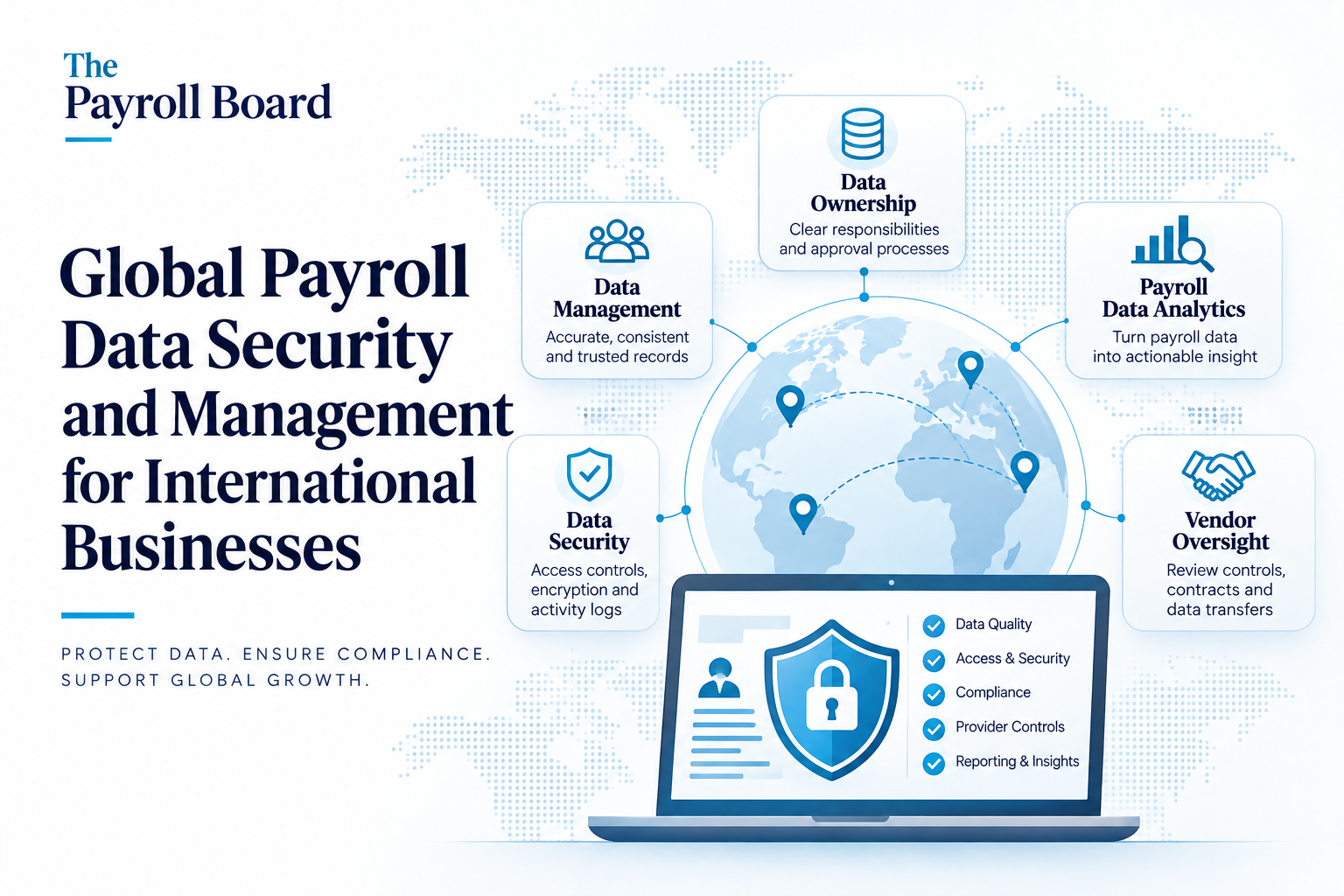
An effective data management payroll framework defines who creates, checks and updates each field. HR may own employment changes, local payroll teams may validate statutory information, and finance may reconcile payments. However, one accountable process owner should oversee how these activities connect.
Document the source of truth for employee details, approval steps for changes and procedures for correcting errors. Review access when people change roles or leave the business. Separate duties where possible so the same person cannot alter bank details and approve a payment without independent verification.
Apply Practical Security Controls
Security measures should reflect the sensitivity of payroll records and how they are used. Consider the following controls:
Access management: give staff and providers only the permissions needed for their responsibilities; review access regularly.
Authentication: require strong authentication and additional verification for high-risk actions.
Encryption: protect payroll information during transfer and storage using appropriate technical safeguards.
Change logs: record who changed employee or payment details and when.
Incident response: define how suspected breaches are investigated, contained and escalated.
Vendor oversight: examine contractual safeguards and evidence of provider controls.
Turn Payroll Information Into Reliable Insight
Used responsibly, payroll data analytics can reveal weaknesses that routine processing overlooks. Compare error rates, late approvals, rejected payments, corrections and provider performance across countries. Trends can help teams distinguish isolated mistakes from recurring control failures.
For example, frequent changes to bank details immediately before pay day may warrant closer review, while repeated corrections in one country may indicate training or system configuration problems. Use aggregated reporting where suitable and restrict identifiable employee information to legitimate business purposes.
Review Providers and Cross-Border Transfers
Outsourcing processing does not eliminate the organisation's need for oversight. Independent payroll consultancy can help assess provider responsibilities, governance arrangements and the operating model supporting secure information flows.
Review where vendors host and access data, which subcontractors they use and how they respond to incidents. Where UK GDPR or EU GDPR applies, international transfers may require a lawful transfer mechanism and suitable safeguards. Requirements vary by jurisdiction, so involve qualified privacy and legal specialists before changing transfer arrangements.
Build a Governance Model That Scales
Reliable global payroll data requires shared standards and local accountability. Establish policies for data quality, system access, retention, supplier reviews and secure disposal. Assign owners for each country and make it clear how issues are escalated to central teams.
Before migrating to a new provider, validate records and test payroll calculations. Reconcile key fields, check permissions and review controls after launch.
Conclusion
International payroll data management is both a security priority and an operational discipline. Clear ownership, appropriate safeguards, useful reporting and provider oversight help businesses reduce errors and protect employee information. A scalable framework combines common governance standards with the flexibility to meet local requirements, supporting accurate payroll and more confident international growth.
