
Effective payroll for global expansion starts long before the first employee is paid in a new country. Each market introduces different tax registrations, employment rules and reporting deadlines. Companies that replicate their domestic payroll process without checking local obligations risk delayed payments, penalties and unexpected costs.
Payroll decisions belong in market-entry planning, alongside hiring and financial forecasts.
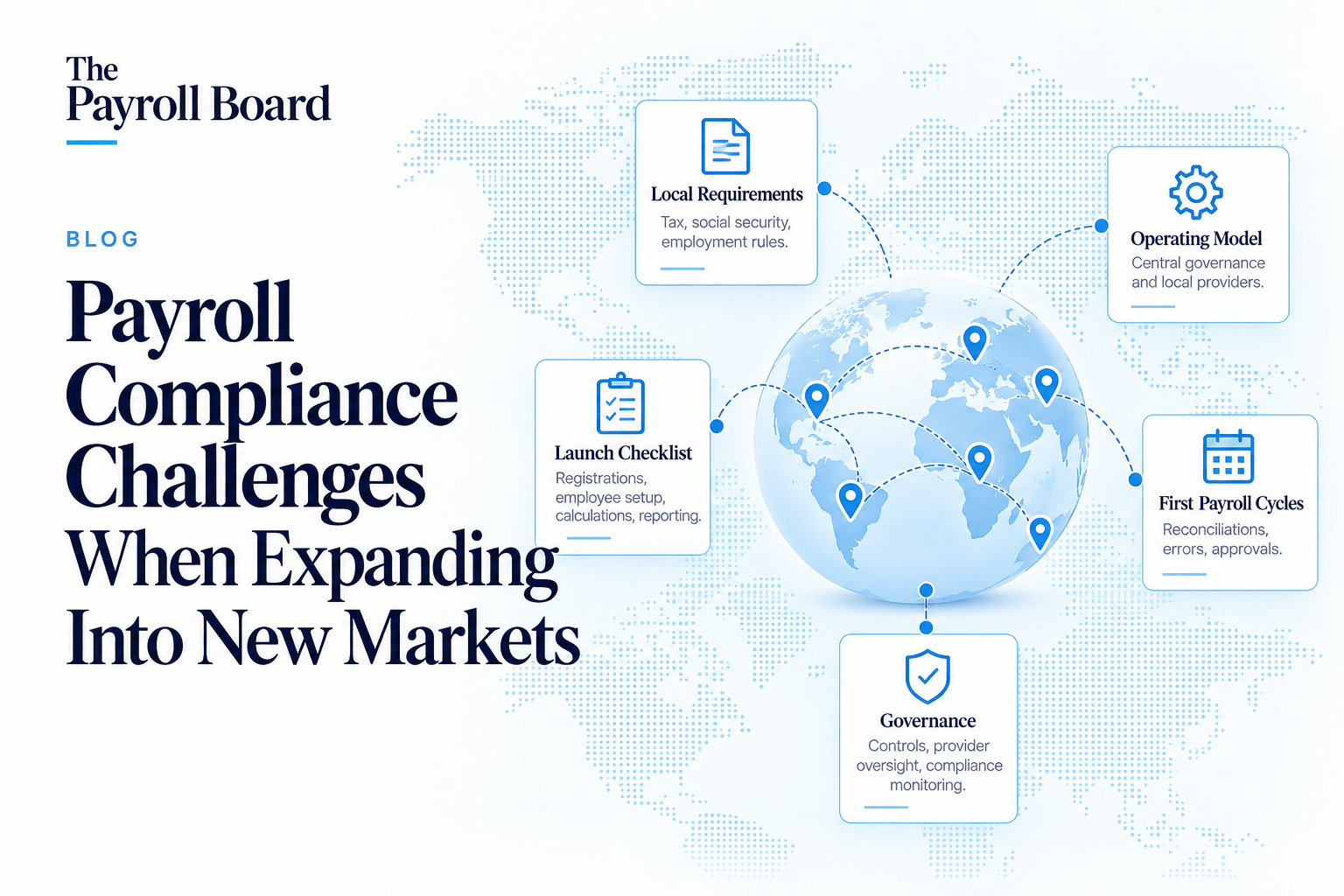
Understand Local Requirements Before Hiring
Employers may need tax and social security registrations before paying staff. Obligations also depend on the hiring structure.
Strong international payroll compliance begins with a country-by-country assessment. Review mandatory deductions, minimum pay, working time, statutory leave, pension contributions and record retention. Check how bonuses, benefits and termination payments are treated locally.
Global policies cannot replace local expertise. Confirm requirements before contracts are signed.
Choose a Payroll Operating Model That Can Scale
Central teams may own governance and reporting, while local providers manage calculations and filings.
Some organisations use international payroll compliance services for local expertise. Assess each provider's responsibilities, reporting and regulatory support.
Ask who validates employee data, who authorises payments, who submits filings and who investigates errors. Put these responsibilities in contracts and process documentation. Outsourcing processing does not automatically remove the employer's legal obligations.
Prepare a Country-by-Country Launch Checklist
A practical international payroll compliance checklist turns market-entry risks into actions that teams can verify before the first pay run.
Registration: confirm the employing entity, tax identifiers and statutory accounts.
Employee setup: validate contracts, classifications, bank details and payroll inputs.
Calculations: test taxes, social contributions, leave and local benefits.
Reporting: document filing deadlines, payment dates and record-keeping rules.
Controls: assign approval owners, access permissions and reconciliation procedures.
Test sample calculations and data transfers. Define an escalation route for unresolved issues.
A checklist is useful only when each action has an owner, evidence of completion and a clear deadline.
Manage Risks During the First Payroll Cycles
Even a carefully planned launch may reveal problems once real employee data enters the system. Inconsistent start dates, missing documentation, unfamiliar pay elements or late approvals can affect calculations.
Independent payroll consultancy can help assess the proposed operating model, clarify vendor responsibilities and establish controls for new markets. This supports an informed integration plan.
During the first cycles, compare payroll results with employment terms and expected employer costs. Reconcile deductions and payments, track exceptions and resolve recurring errors before expanding into further countries.
Prevent Problems as the Business Grows
Common international payroll compliance issues include missed statutory deadlines, outdated tax settings, unclear employee classifications and weak oversight of local providers. Rapid hiring can make these gaps harder to detect.
Reduce exposure through regular control reviews, documented regulatory updates and clear communication between payroll, HR, finance and legal teams. Monitor whether providers meet agreed service levels and whether employee records remain complete and accurate.
Protect sensitive data through controlled access, lawful transfers and appropriate retention.
Build Sustainable Global Payroll Governance
A scalable framework combines central visibility with local accountability. Establish common measures for accuracy, timeliness, compliance incidents and provider performance, while allowing local teams to apply country-specific requirements.
Review controls when entering new markets or changing providers or systems.
Conclusion
Expanding internationally requires more than adding employees to a payroll system. Local compliance checks, well-defined responsibilities, reliable data and post-launch monitoring help businesses protect employees and reduce regulatory exposure. Treating payroll as part of market-entry strategy makes sustainable growth easier to manage.
