
Managing cross border payroll across countries introduces tax, employment and reporting differences that can lead to errors, late salaries and unexpected liabilities. Reducing exposure requires clear ownership, reliable data and locally appropriate processes.
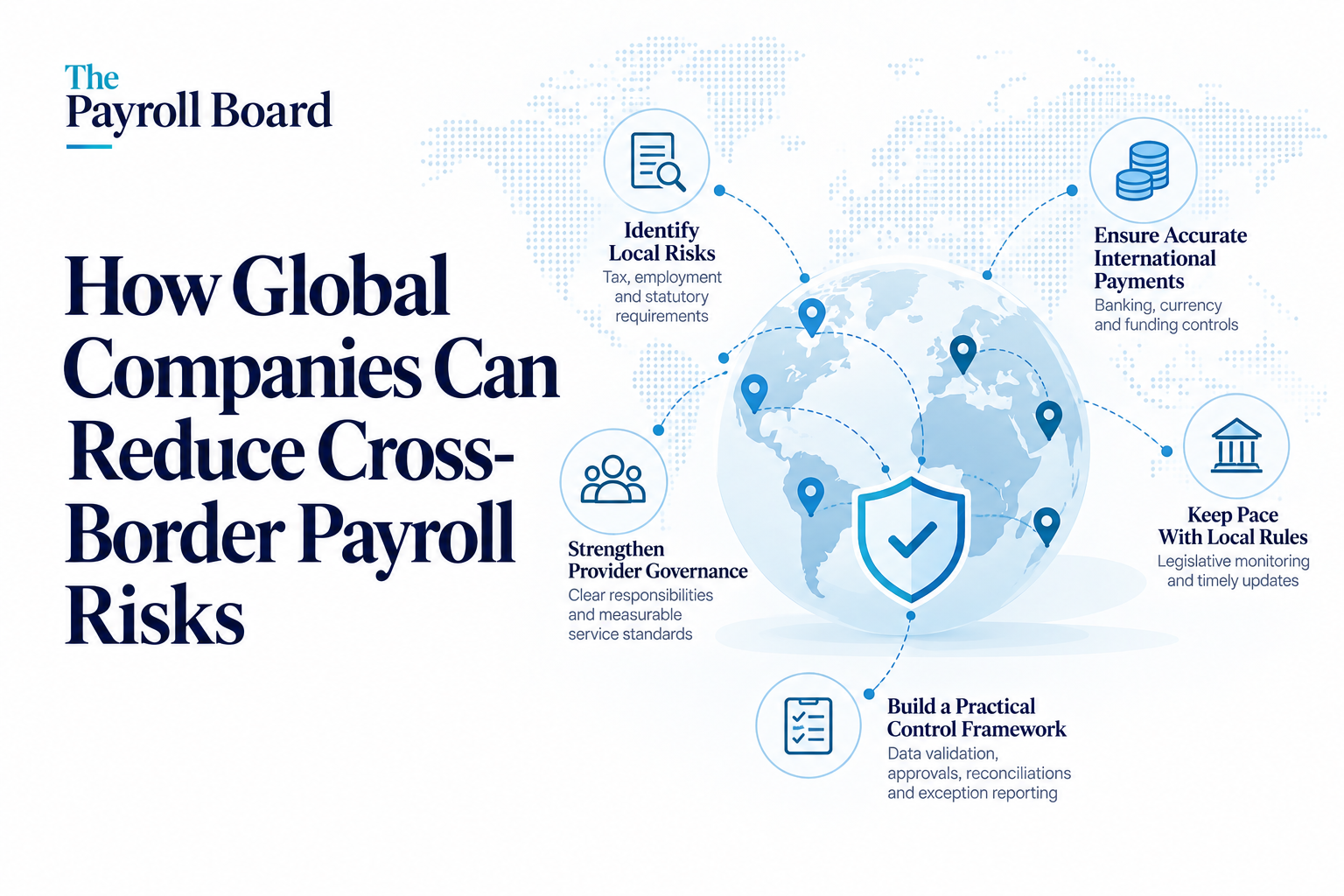
Identify Risks Before Entering a New Market
Before hiring, confirm employer registrations, statutory contributions, payment deadlines and rules for benefits or termination. Assign responsibility for interpreting local legislation.
Strong international payroll compliance depends on combining central oversight with local knowledge. Global policies establish controls, while country specialists validate local rules. Keep a risk register with owners, deadlines and evidence of resolution. The register should cover tax filings, statutory pay, employee records and local approval procedures.
Improve Accuracy in International Payments
Even when payroll calculations are correct, cross border payroll payments can fail because of banking details, currency conversion, cut-off times or unclear approval processes. Transfers may involve intermediaries and varying settlement periods.
Validate bank details, agree funding deadlines and reconcile authorised amounts against completed transfers. Check exchange rates and fees to confirm that contractual net pay reaches employees. Establish an escalation process for rejected payments so payroll, treasury and HR can respond quickly.
Keep Pace With Changing Local Rules
Tax rates, social security thresholds, filing formats and employment protections may change independently in each market. Failure to update calculations or reporting procedures can create compliance gaps even where the original setup was correct.
A reliable approach to cross-border payroll regulations involves assigning responsibility for legislative monitoring and documenting how changes are reviewed, tested and introduced. Providers may supply updates, but internal teams must check that changes reach system settings and filings. Review classifications and benefits periodically.
Strengthen Governance Across Providers
Multinational businesses often use different payroll vendors across their markets. Without common oversight, it can be difficult to compare accuracy, reporting quality and response times. Each contract needs clear responsibilities and measurable service standards.
Independent payroll consultancy can support an assessment of vendor performance, payroll processes and the wider operating model. This reveals weak controls and improves coordination while preserving local expertise. Governance should support accountability, not centralisation at any cost. Review country-level incidents, document why exceptions were approved and agree on corrective action with providers.
Build a Practical Control Framework
Effective cross border payroll solutions are not limited to technology. They combine systems, qualified local support and repeatable controls that employees can rely on across markets.
Prioritise these measures:
Data validation: check new starters, leavers, compensation changes and banking details before processing.
Approval controls: separate preparation, review and payment authorisation wherever practical.
Reconciliations: compare payroll outputs with funding, general ledger entries and statutory submissions.
Exception reporting: track errors, their causes, responsible owners and corrective action.
Provider reviews: assess service quality, compliance updates and recurring operational issues.
Test controls during migrations, acquisitions and rapid hiring. Assign an owner to every exception.
Conclusion
Reducing cross-border payroll risk takes local regulatory checks, reliable payments, vendor oversight and documented controls. Combining global governance with local expertise supports safer growth.
