
A payroll acquisition checklist helps businesses identify compliance risks before combining payroll operations across countries. During M&A, differences in tax reporting, employment terms and payroll providers can disrupt payments and create liabilities after completion.
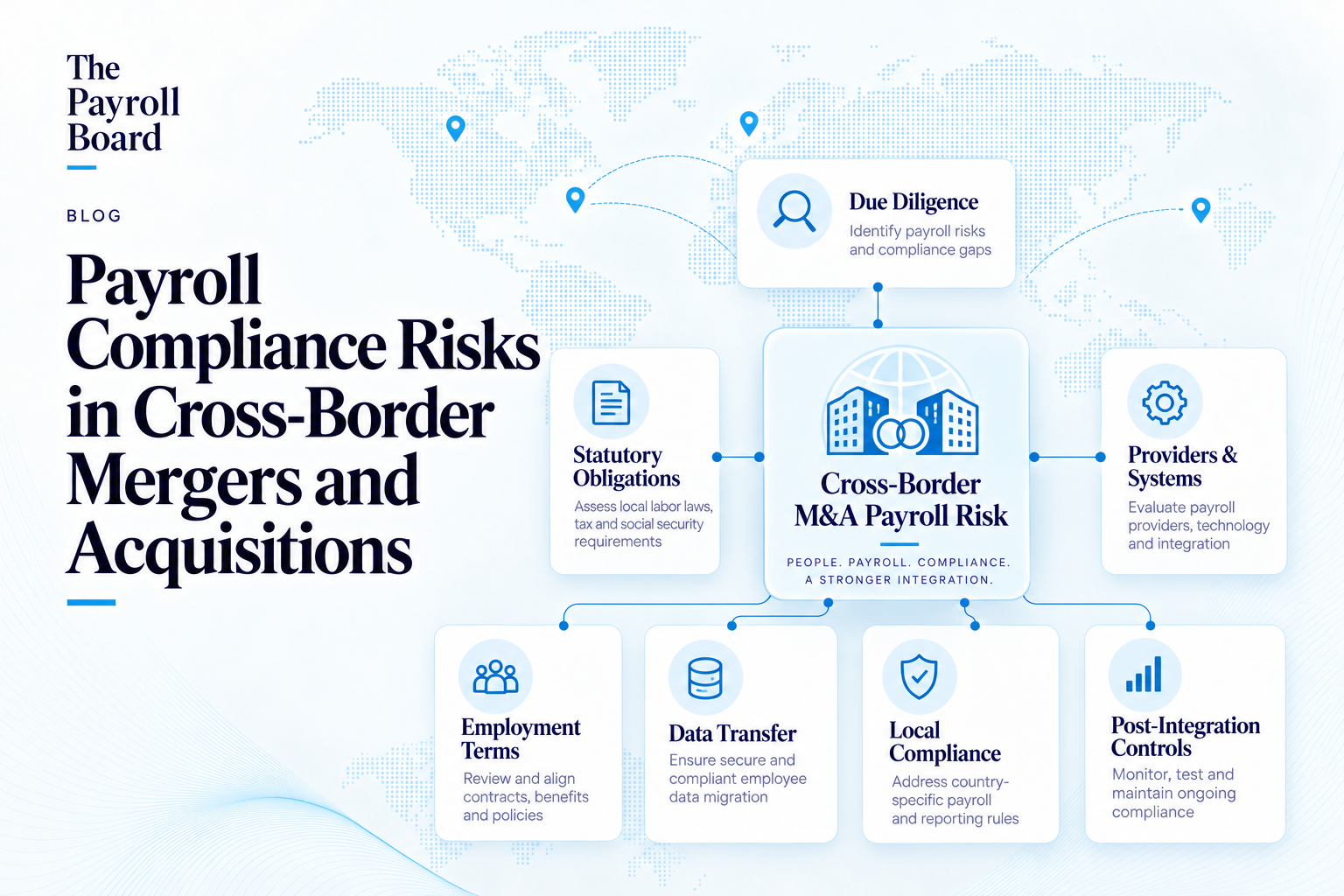
Why International Acquisitions Complicate Payroll
Two companies may calculate benefits differently, use separate approval processes or hold employee data in incompatible systems. Cross-border operations add different rules for taxes, contributions and leave.
Maintaining international payroll compliance means checking which obligations remain with the acquired employer, which transfer to a new entity and who is responsible for filings. Resolve these questions before migrating employee records. Global policies cannot replace local legal review.
The acquiring team should also confirm where supporting payroll documents are stored and whether local teams can retrieve them when needed.
What to Check Before the Deal Closes
A practical mergers and acquisitions payroll checklist starts with due diligence. Payroll, HR, finance and legal teams should review the target organisation's processes and document any unresolved risks.
Employment terms: salaries, bonuses, accrued leave and contractual benefits.
Statutory obligations: tax deductions, social security, pensions and filing deadlines.
Historical liabilities: unpaid contributions, disputed payments and prior audit findings.
Providers and systems: contracts, data quality, access controls and reporting responsibilities.
Prioritise findings by urgency and assign an owner and deadline to each material risk.
Managing the Payroll Transition
Decide whether to retain local providers or adopt a shared platform. Moving too quickly without testing can create errors.
Independent payroll consultancy can support vendor assessment, operating-model decisions and a phased integration plan. Clarify ownership across central teams, local specialists and providers, while protecting payroll continuity.
Protect Employee Rights and Data
Rules governing employee transfers vary by country and transaction type. For example, UK TUPE protections may apply to certain business transfers, while EU countries have their own implementing legislation. Employers must review local requirements before changing contracts or benefits.
Protect payroll data with controlled access and validated transfers. Investigate mismatches in pay, banking or tax settings before the first live run.
Reducing Risk After Integration
Effective payroll mergers and acquisitions planning continues after the legal transaction. New processes need evidence that they work, not just confirmation that payroll ran on time. Reconcile gross-to-net calculations, statutory deductions and employer costs across the first cycles, and track employee queries for patterns.
Define who approves changes, monitors local laws and escalates exceptions. Regular vendor reviews and documented controls prevent recurring problems.
A Practical Integration Roadmap
Use the payroll merger acquisition checklist as a working document through three stages:
Before completion: identify legal entities, employees, payroll registrations and outstanding liabilities.
During transition: confirm ownership, test data transfers, communicate changes and validate statutory reporting.
After launch: reconcile results, resolve discrepancies and monitor controls during subsequent payroll cycles.
Payroll integration is not just a system migration. Due diligence, accountability and phased execution protect employees and reduce compliance exposure.
